What is Hippotherapy?
‘Hippotherapy’ is also known as equine-assisted physiotherapy.
Equine-Assisted Physiotherapy is delivered by an ACPEA (Association of Chartered Physiotherapists working in Equine Activities) accredited physiotherapist, who has completed post-graduate training in this specialism. For more information, please see the ACPEA website.
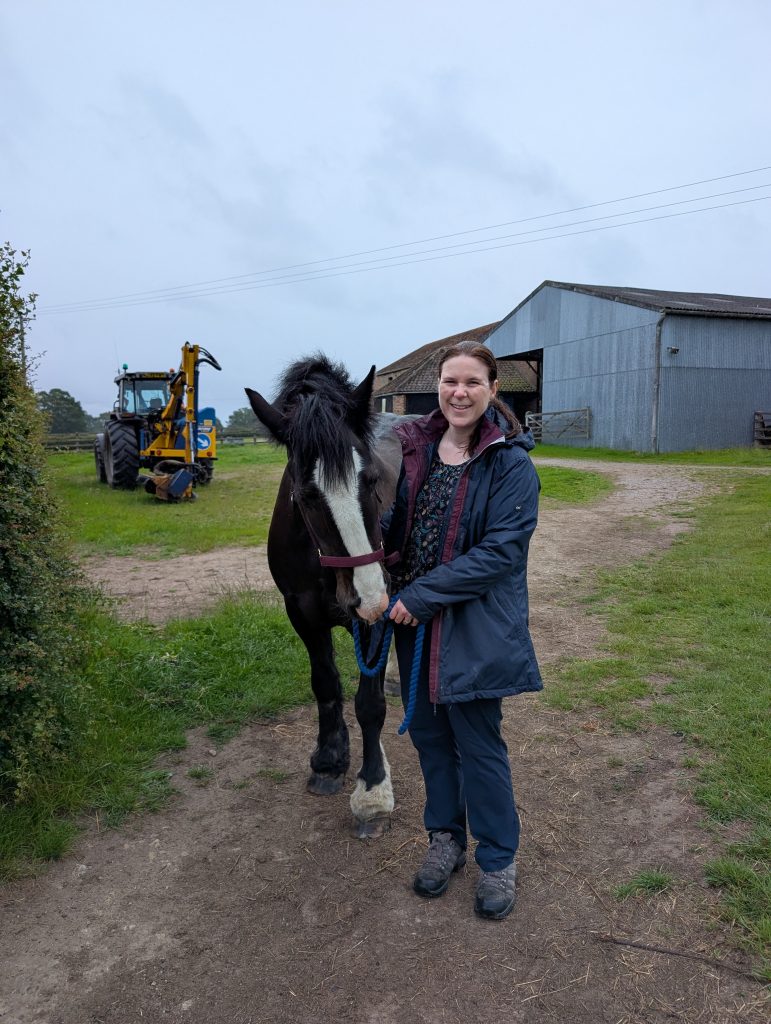
Lauren completed post-graduate certificate training with Ulster University in April 2026 to become an ACPEA accredited Equine-Assisted Physiotherapist. Lauren has worked under supervision of an experienced Equine-Assisted Physiotherapist for Riding for Rehab Ltd since January 2025 to gain extensive practical experience and continues to work as an Associate for Riding for Rehab.
Derived from the Greek word hippos (meaning horse), hippotherapy does not involve learning horse riding skills. Instead, the horse is a therapeutic partner and a ‘dynamic clinical tool’, helping to deliver targeted, effective treatment in a unique and highly engaging way.
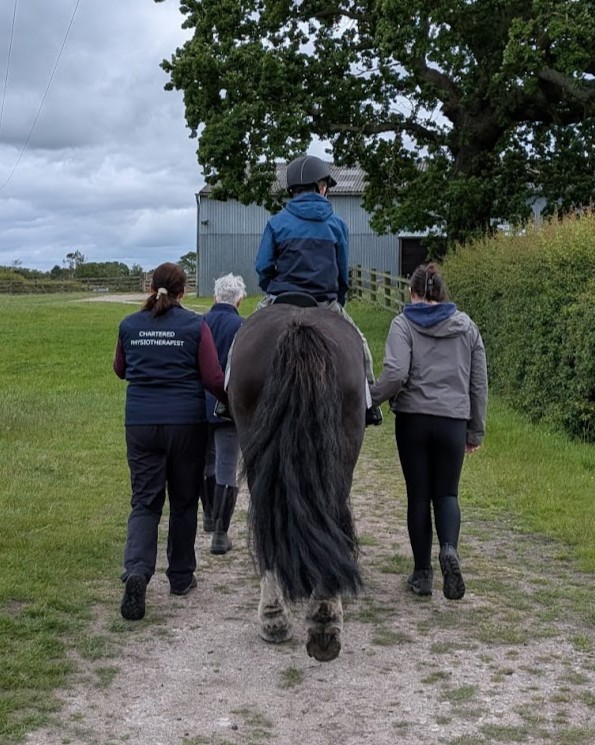
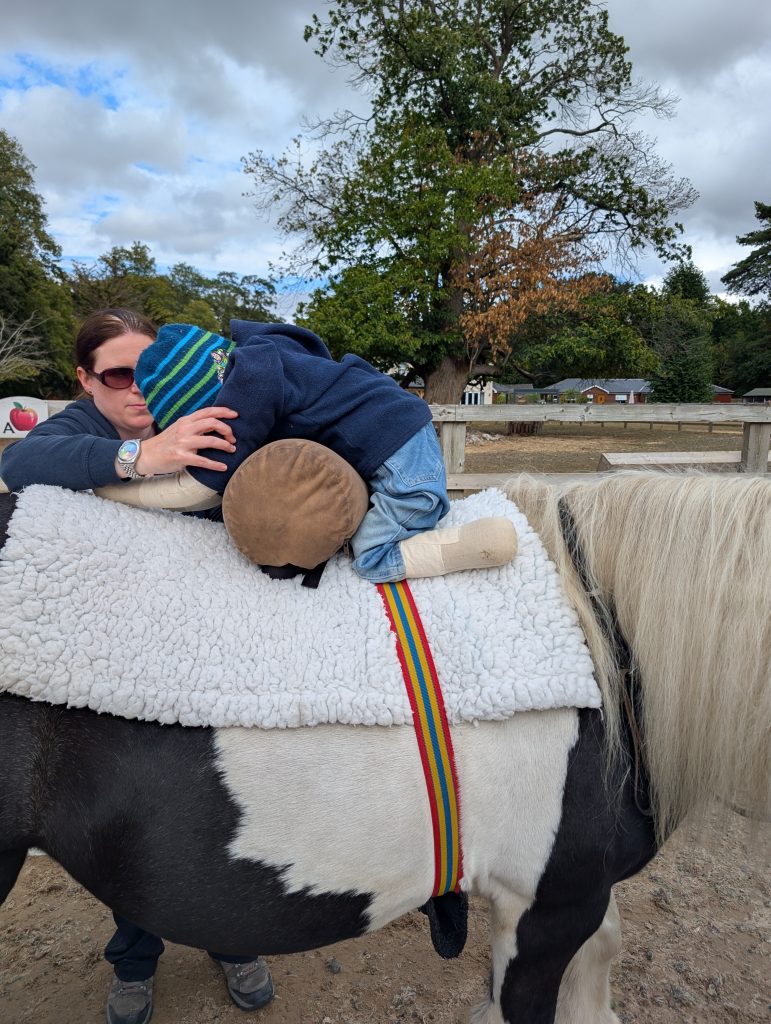
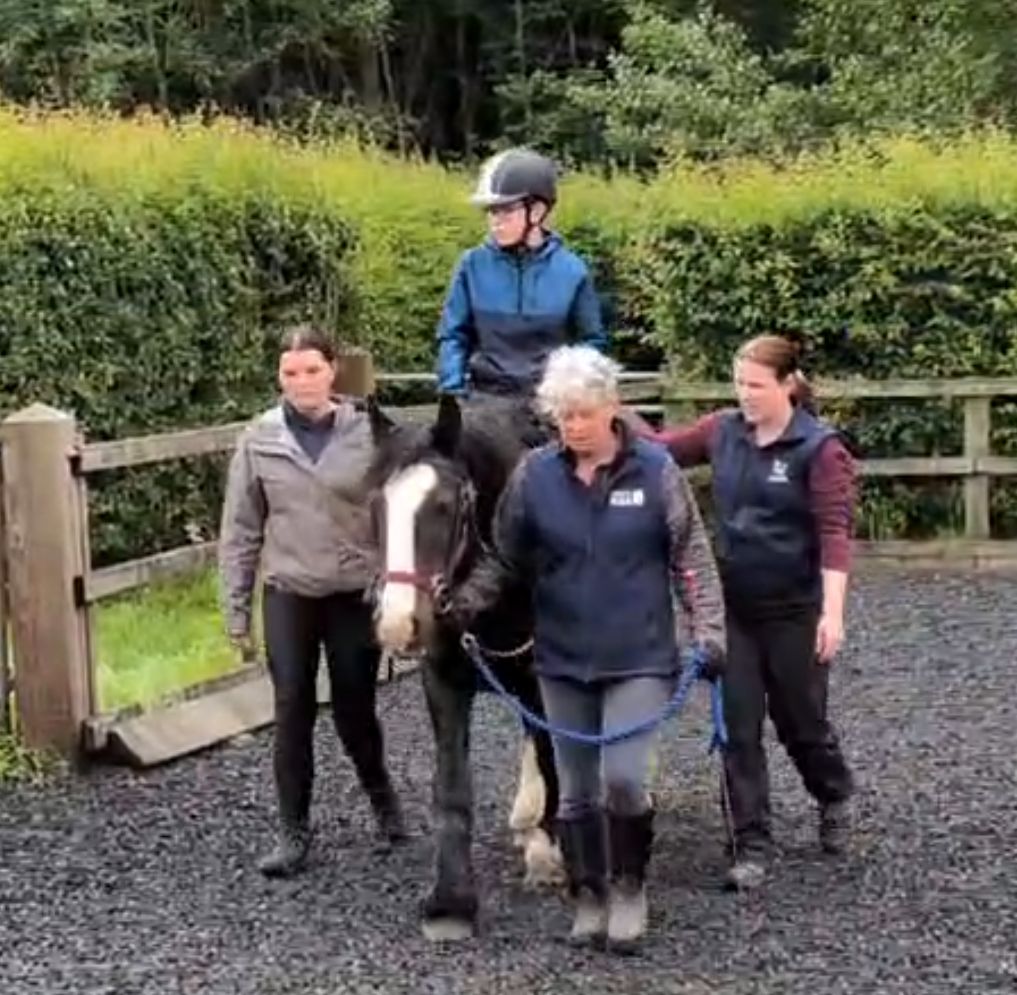
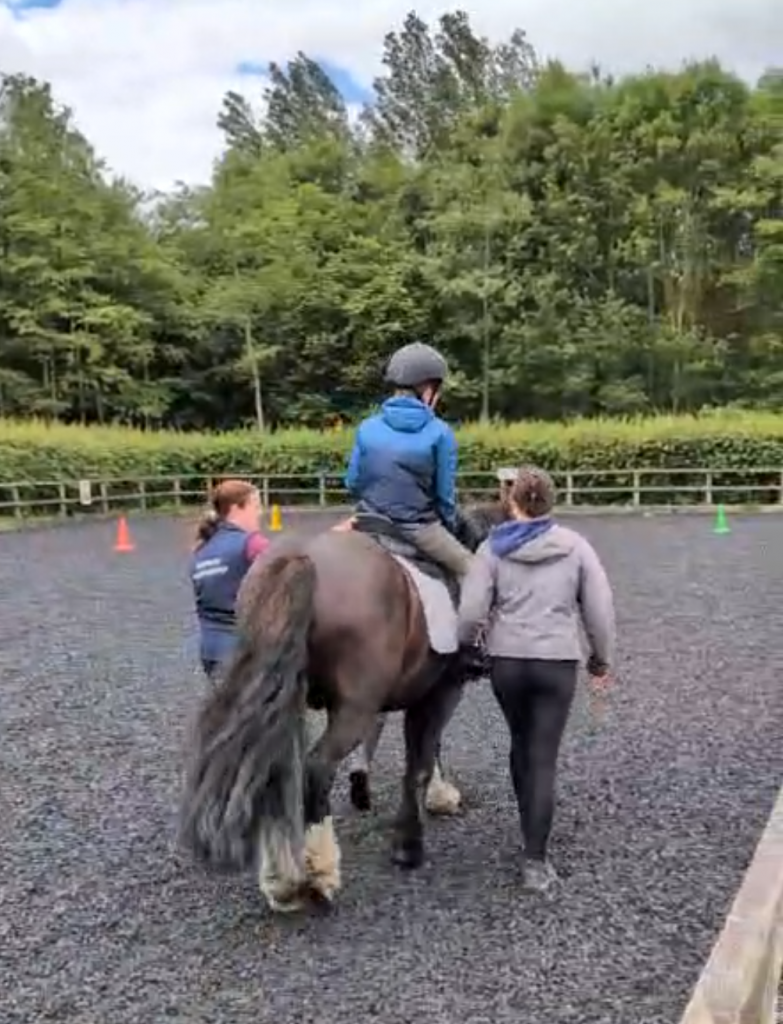
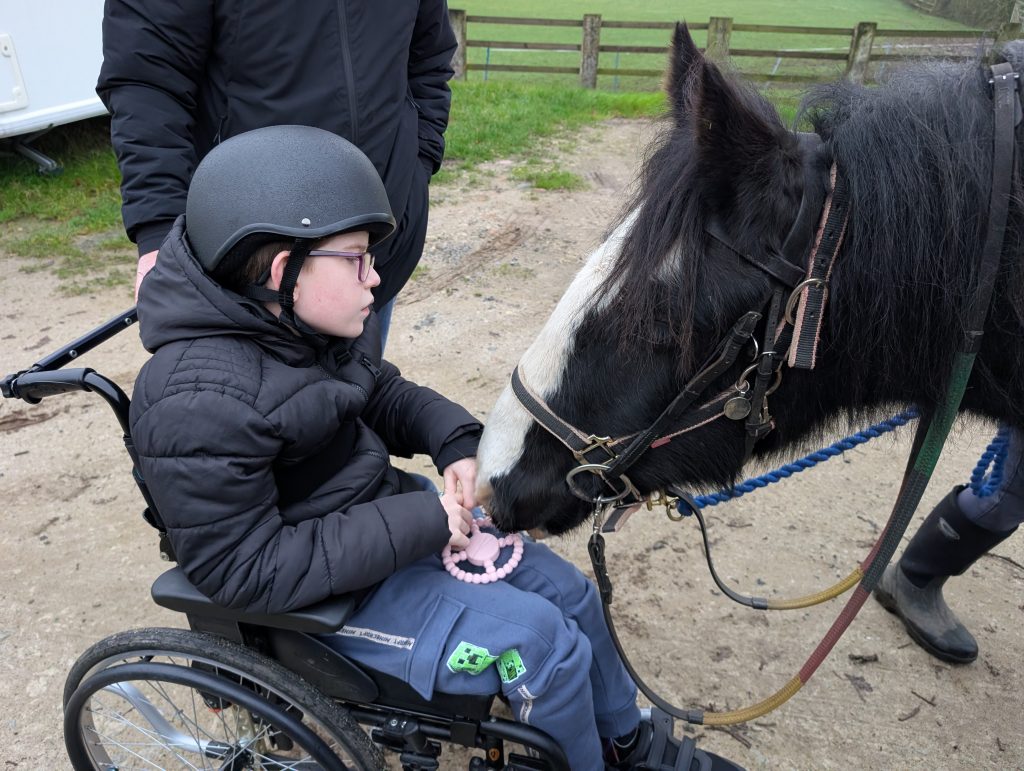
Therapy may be on the ground, incorporating horse-care into therapy activities, or may be mounted on the horse using different postures (including side-sitting and rear-ward facing). Mounted hippotherapy utilises the unique multi-dimensional movements of the horse to help the client improve their posture, sitting balance and coordination. Often, therapy involves the participant sitting on a fleece pad, but it can also involve using a saddle with stirrups.
Hippotherapy can support joint mobilisation and facilitate dynamic muscle stretches (in particular, using the warmth and shape of the horse to stretch tight hip adductor muscles). Hippotherapy is ‘therapy in disguise’ and can also benefit clients’ communication, self-esteem, and confidence.
How does it work?
At walk, a horse’s pelvis moves in a rhythmic, three-dimensional pattern that closely mimics the movement of a human pelvis during walking. This is particularly helpful for individuals who have never developed the ability to walk, or who may have lost the ability to walk.
As the horse moves, it transfers thousands of precise motor and sensory inputs (known as perturbations) to the mounted individual. This continuous movement challenges the client to make subtle postural adjustments, engaging their core trunk muscles, stabilising their spine, and naturally prompting their body to build stronger neural pathways. It provides a level of dynamic, repetitive physiotherapy that is impossible to replicate in a traditional physiotherapy clinic setting.
The clinical benefits
Because it engages the whole body, hippotherapy is an excellent modality for improving overall physical function. Benefits often include:
- Improved Core Strength: Constant subtle adjustments on the horse build deep postural muscles.
- Enhanced Balance & Coordination: The unpredictable yet rhythmic movement trains the brain’s spatial awareness and the vestibular system to improve balance and coordination.
- Normalised Muscle Tone: The warmth of the horse and the rhythmic motion help relax high toned (‘spastic’) tight muscles and can stimulate low-tone muscles.
- Better Joint Mobility: The gentle, repetitive motion naturally mobilises the pelvis, hips, and spine.
- Sensory Integration: The equine environment and the tactile experience of the horse provide rich sensory input.
Who can benefit?
Hippotherapy can be a transformative treatment for both children and adults facing various neurological, physical, or developmental challenges. It may be used as part of a comprehensive treatment plan for conditions such as:
- Cerebral Palsy
- Multiple Sclerosis (MS)
- Stroke recovery
- Developmental delay and dyspraxia
- Traumatic brain and spinal cord injuries
- Autism Spectrum Disorder (ASD)
Hippotherapy with Riding for Rehab Ltd
Lauren Southern, ACPEA-accredited Equine-Assisted Physiotherapist, currently delivers ‘Hippotherapy’ (Equine-Assisted Physiotherapy), as an Associate for Riding for Rehab Ltd at York District RDA on Saturdays. Sessions are conducted in a safe, highly controlled environment, alongside experienced horse handlers.
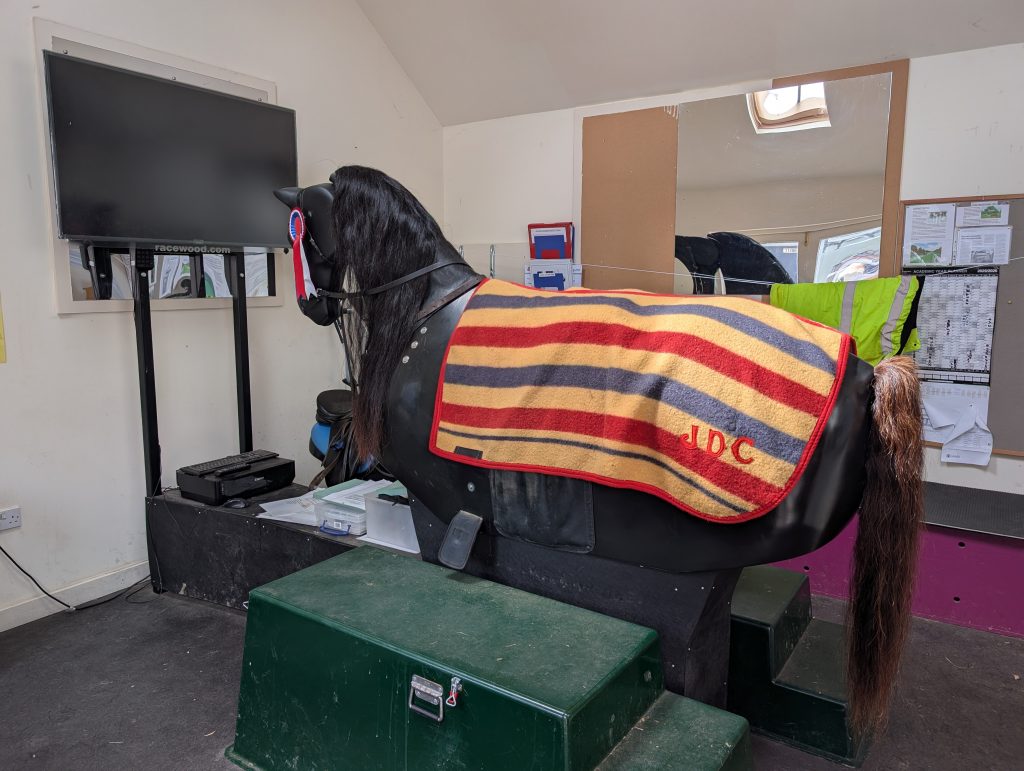
For those individuals who cannot work with a ‘real’ equine, a mechanical horse or use of a riding simulator in land-based physiotherapy sessions offers another alternative.
All ‘Hippotherapy’ enquiries and referrals should be directed to Elizabeth Beckerlegge, Director of Riding for Rehab, in the first instance.
Elizabeth can be contacted by phone: 07726 592 728 or via email: ridingforrehab@gmail.com
For further information, please see the Riding for Rehab website: https://www.ridingforrehab.com/